🎨 Designing My New Online Avatar
For the past few days, I’ve been redesigning something that had remained largely unchanged for years: my online avatar.
At first glance, it might seem like a small detail. It’s just a profile picture, after all. But when you use the same image across your blog, GitHub, Mastodon, X, Xbox, and other platforms, it becomes part of your digital identity. It’s often the first thing people recognize before they remember your name.
This post is a look at the design process behind my new avatar, the countless iterations that led to it and how generative AI was used throughout the project.
🎯 Why Redesign My Avatar?
My previous avatar served me well, but over time I felt it lacked a distinctive visual identity.
I wanted something that would:
- Be instantly recognizable at small sizes
- Reflect my personality
- Look professional without feeling corporate
- Work consistently across different platforms
- Have a unique silhouette that stands out in a crowded timeline
Most importantly, I wanted an avatar that felt like mine.
🎮 Where the Previous Avatar Came From
Interestingly, my previous avatar wasn’t custom-made at all.
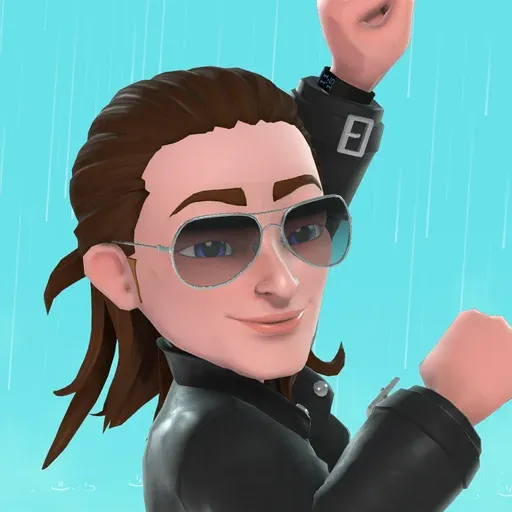
It started life as an Xbox avatar created with Microsoft’s Xbox Avatar Creator. At the time, it was a practical solution. The editor allowed me to create a character that roughly resembled how I wanted to present myself online, and it looked good enough for use as a profile picture.
Eventually, I took a screenshot of the avatar and started using it across various platforms.
For several years, it served its purpose well.
The problem wasn’t that the avatar looked bad. The problem was that it wasn’t really mine. It was constrained by the options available in the Xbox Avatar Creator and shared the same visual style as countless other Xbox avatars.
As I spent more time building my personal website and online presence, I started wanting something more distinctive: an avatar with its own visual identity rather than one generated from a predefined set of components.
That’s when the idea of creating a completely custom avatar started to take shape.
📋 Starting With a Clear Goal
Before changing anything, I wrote down a few design principles.
I wanted the avatar to feel:
- Technical
- Clean and modern
- Friendly and approachable
- Consistent across all sizes
One thing I deliberately avoided was filling the design with obvious tech references such as code snippets, terminal windows, or binary backgrounds. I think those kinds of tech-themed visuals work better in banner images, where there’s more room to incorporate them naturally.
I wanted the character itself to carry the identity.
🤖 Using Generative AI as a Design Partner
Another interesting aspect of this project is that the new avatar was created with the help of generative AI.
Rather than treating AI as a tool that would instantly generate a finished result, I approached it more like a design partner. The process consisted of many small iterations: adjusting hairstyles, refining colors, experimenting with different compositions, and gradually refining small details with each iteration.
Creating the avatar was only part of the experience.
I also saw the project as an opportunity to learn how to effectively use generative AI for creative work.
As a software engineer, I was already familiar with using AI for coding assistance and research. Visual design, however, was a completely different experience. I quickly discovered that producing a good result wasn’t about writing a single perfect prompt. It was about observation, feedback, experimentation, and iteration.
A typical session often looked something like this:
- Generate a new variation
- Review the result
- Identify what worked and what didn’t
- Make a small adjustment
- Repeat
Sometimes a change that sounded insignificant, such as slightly adjusting a skin tone, changing the shape of the braids, or refining a pair of sunglasses would noticeably improve the overall design.
The process felt surprisingly similar to software development. Instead of shipping a large feature all at once, the best results came from many small incremental improvements.
By the end of the project, I had not only arrived at a new avatar but also learned a great deal about collaborating with generative AI on a creative project.
In that sense, this avatar redesign became as much a learning exercise as it was a design project.
🔄 The Iteration Process
What surprised me most was how many small details mattered.
A hairstyle that looked great at large resolution could become a blurry shape when reduced to a small profile picture.
A color adjustment that seemed insignificant could completely change the overall feel of the image.
A tiny modification to the sunglasses could make the face look more balanced.
Over time, I experimented with:
- Different hairstyles
- Hair colors
- Sunglasses shapes
- Skin tone adjustments
- Jacket details
- Background colors
- Overall composition
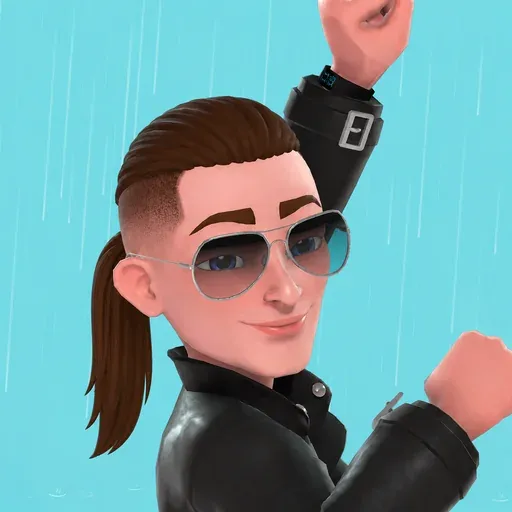
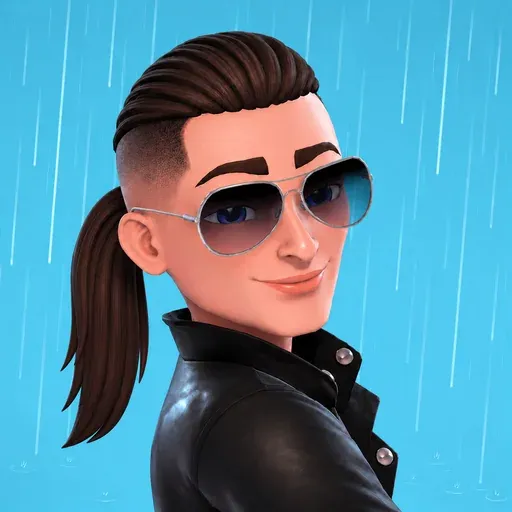
Looking back, many of the rejected versions weren’t bad. They simply weren’t distinctive enough.
💇 Exploring Different Hairstyles
One of the biggest design explorations involved the hairstyle.
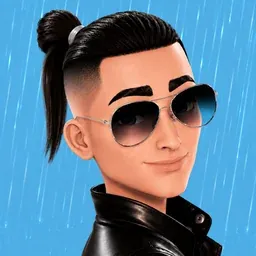
The first custom design featured a classic ponytail. It worked well because it was clean, recognizable, and matched the style I had in mind.
However, I realized that while it looked great at larger sizes, it wasn’t ideal for the circular profile pictures used by most platforms.
Later, I experimented with different braided hairstyles. Besides adding more visual interest and a stronger sense of character, they also fit much better within the circular crop used by most social platforms.
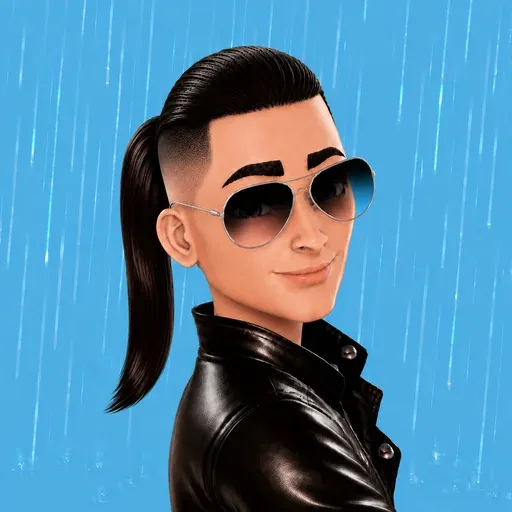
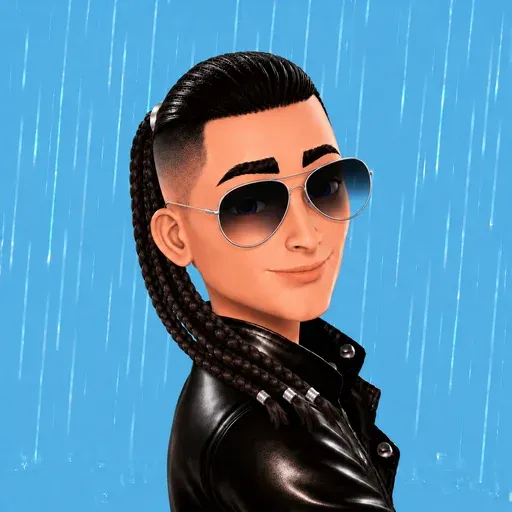
As the designs became more detailed, I found myself facing a new challenge. While the braids added personality, they also made the avatar visually busier.
Finding the right balance between detail and recognizability became one of the main goals of the design process.
After all, a good avatar should be just as recognizable at 32x32 pixels as it is at 1000x1000 pixels.
🔧 Refining the Details
As the overall design came together, the focus gradually shifted from major changes to small refinements.
Individually, these adjustments were subtle. Together, they made a noticeable difference.
For example:
- Adjusting hair volume
- Refining the shape of the braids
- Tweaking skin tones
- Changing the color of hair ties
- Refining the sunglasses frame
- Improving the overall silhouette
Many of these changes were only a few percent different from previous versions, yet they noticeably improved the final result.
It’s a good reminder that design is often about refinement rather than dramatic transformation.
🏁 Choosing the Final Design
After many iterations, I tried a foldover ponytail, where the ponytail is folded back on itself. It brought together everything I had been aiming for throughout the design process.
The foldover combined several advantages:
- A strong, recognizable silhouette
- Clean overall composition
- Distinctive appearance
- Good readability at small sizes
Most importantly, it simply felt complete.
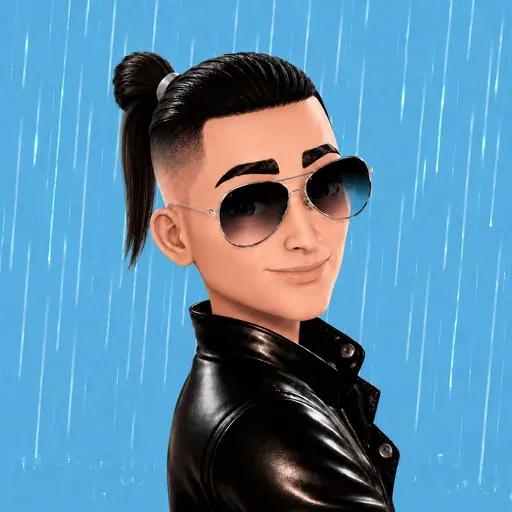
Every previous experiment contributed something valuable, but this version brought all of those improvements together.
🖼️ Avatar Evolution
One of the most interesting parts of this project was seeing how the design evolved over time.
From an Xbox avatar screenshot to a custom AI-assisted avatar, the final result was shaped by many small experiments and refinements.
💭 Final Thoughts
What started as a simple idea: “updating an old profile picture”, turned into a surprisingly enjoyable project.
The final avatar is not only more recognizable and personal than the Xbox avatar I used for years, but it also represents my first serious attempt at using generative AI as part of a creative design workflow.
Looking back, the most interesting part wasn’t the final image itself. It was the iterative process: experimenting with ideas, refining small details, and gradually discovering what worked and what didn’t.
For now, the foldover version has earned its place as my new online identity.
Until I decide to redesign it again.
Although… I already see a few improvements for the aviator sunglasses. 😅